

Hami Mahani
The Day After the Marathon: Your First 72 Hours of Recovery (and What Comes Next)
You did it. Twenty-six point two miles, a medal around your neck — and now a flight of stairs looks like a second race. Welcome to the day after the marathon. What you do in the first 72 hours does not just decide how sore you are on Tuesday. It decides how the next two weeks feel, and how cleanly you get back to running.
Here is the honest version: you cannot speed up muscle repair with willpower, and most recovery hacks are marketing. But you can absolutely slow it down with bad decisions — a run too soon, a day of barely eating, a week of short sleep. This is the simple plan I give every runner I know: the first three days, the two weeks after, the warning signs, and how to choose what comes next.
Rest of race day: keep moving, then stop
When you cross the line, keep walking. Get your medal, get your photo, hug your people — then stroll another 10 to 15 minutes before you sit down. The worst post-race move is parking yourself on a curb for an hour: everything stiffens, and standing back up becomes an event.
Then eat and drink on a schedule, not on appetite, because your appetite is lying to you right now. I laid out the full sequence — fluids and sodium first, carbs second, protein third — in our first-24-hours refuel plan. Follow that today. Tonight: warm shower, dry clothes, legs up on the couch, bed earlier than you think.
Day 1: the day the stairs win
The deep ache in your quads is delayed-onset muscle soreness: every step you took, especially the downhills, put tiny tears in the muscle, and it peaks right about now — 24 to 48 hours after the finish. Going down stairs sideways, one step at a time, holding the rail, is not weakness. It is physics. Everyone does it. Nobody posts it.
What actually helps today:
- Walk, in small doses. Two or three easy walks of 10 to 20 minutes. Gentle movement pumps blood through damaged muscle and genuinely loosens you up. Total bed rest makes day 2 worse, not better.
- Sleep like it is your job. Tonight and tomorrow night are when your body does its heaviest repair work. Aim for 8 to 9 hours, and count a nap as training.
- Eat protein at every meal. Roughly 25 to 40 grams per meal — eggs, Greek yogurt, chicken, tofu — plus normal carbs to keep refilling the tank you emptied.
- Keep hydrating with electrolytes. Water plus sodium, steadily, until your urine is pale yellow and your weight is back to normal. A lot of the day-after headache and fog is just unfinished rehydration.
What not to do matters just as much: No running — not even a little shakeout jog; there is nothing to shake out, only damage to add to. No deep stretching, aggressive foam rolling, or hard massage: the muscle is micro-torn, and grinding on it today delays the repair that just started. Gentle mobility is fine from day 2.
Days 2 and 3: turning the corner
By the 48-to-72-hour mark, soreness should crest and ease. Stairs get negotiable again. This is when easy movement starts paying real dividends: a longer walk, a very easy spin on a bike, a gentle swim or pool walk — anything that moves blood without adding impact or damage. Ten to thirty minutes, conversational.
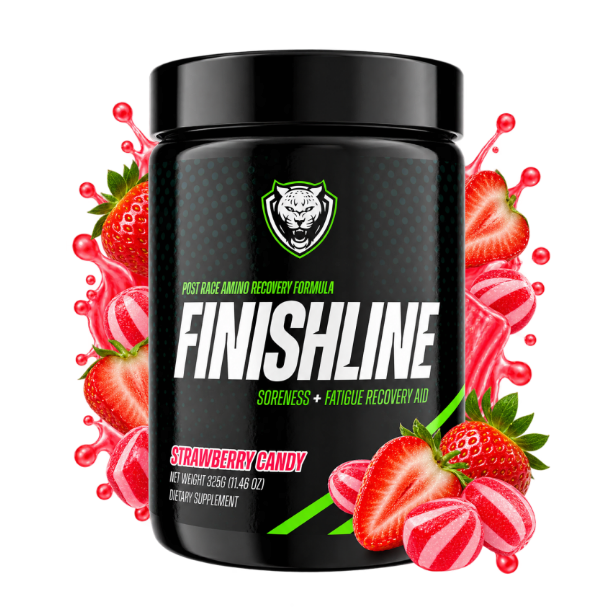
Keep the fundamentals going — they are the whole program: protein at every meal, normal-sized meals (this is not the week to diet), and sleep. This is the window where I lean on FinishLine, our post-run recovery aminos — my appetite for big meals is still unreliable, and protein is the one thing repair cannot skip. Like everything we make, it is backed by our 125% money-back guarantee. A solid protein-rich meal does the foundational work either way. What matters is that the protein actually shows up, every day, while your legs rebuild.
Weeks 1 and 2: the reverse taper
You built fitness for months by tapering the load up. Now taper it back down. For most runners, week 1 means no running at all — walking and easy cross-training only. If, late in the week, the soreness is fully gone and you can walk downstairs normally, a 15 to 20 minute very easy jog is a test, not a workout. Any limp, any sharp pain: stop, and give it more days.
Week 2, short easy runs come back every other day — 20 to 40 minutes, all conversational, no workouts, no long run, no "just testing" mile at goal pace. Our reverse taper plan for weeks 1 to 4 maps the full return, with readiness checks for each step up. The fear everyone has — losing fitness — is backwards. Two patient weeks cost you almost nothing. One rushed week that turns soreness into a stress injury costs you the season.
Warning signs: when recovery needs a doctor
Normal soreness is symmetric, dull, and improving each day after day 2. Get medical help promptly if you see any of these instead:
- Dark, cola-colored urine, or barely urinating — a possible sign of serious muscle breakdown stressing the kidneys.
- One leg much more swollen than the other, or a calf that is tight, warm, and painful.
- Chest pain or breathlessness that is not easing with rest.
- Fever, or a blister or wound that is hot, red, or streaking.
- Sharp, specific pain that changes how you walk, or soreness still getting worse after day 4.
Black toenails and general exhaustion? Normal. The list above? Not normal, and not something to tough out.
The post-race blues are a real thing
Around day 3 or 4, a lot of finishers feel strangely flat — irritable, unmotivated, a little lost. It has a name, the post-marathon blues, and it is not weakness. You spent months with a clear mission organizing your weeks, then finished it in a single morning. The structure vanishes and the tank is empty at the same time.
What helps: keep light structure (walks, normal meals, normal sleep), stay around your people, and celebrate properly. And make no big decisions this week — not about your job, not about your training log. Resist fixing the flat feeling by signing up for something at 2 AM. Give it until the weekend.
What's next: picking your spring goal
Because around day 5 to 7, with a clear head and legs that work again, the pull comes back — for almost every runner I know. Channel it properly. Spring marathons land between late March and early May, and the base for them is built in November, not January. Our November base plan for a spring marathon shows how to structure the next four weeks: easy volume, consistency, no hero workouts while you finish recovering.
If this was your first marathon and you are already thinking about doing the second one smarter, work through our beginner's 16-week marathon plan — especially the fueling work — the skill that improves most between a first and second marathon. When the base miles start, that is when I practice mine: MARATHON before the run and Marathon Gummies during it, so my stomach is trained long before race day asks anything of it.
But all of that starts from one place: a body that recovered fully. Eat, sleep, walk, wait. The runners who come back strongest are not the ones who ran first. They are the ones who recovered first.
Your turn: what does YOUR day after look like — are you going down the stairs backwards yet, and what spring race are you already quietly eyeing? Tell me in the comments. I read every one.
— Hami, 6AM Run
